Stuck on a Problem? The Surprising Science of Stepping Away
For the past few weeks, I have been carrying one specific problem around with me everywhere I go.
It has been sitting in the back of my mind during meetings. It has followed me into conversations. It has shown up while I am cooking dinner or folding laundry. If I am not intentionally distracted by something else, it is there. Waiting.
On Monday morning, after dropping the kids off at school, I found myself thinking about it again. As I drove home, I was already mentally preparing to head straight to my computer. I had a plan. I was going to troubleshoot the solution I had been trying. I was going to push through. I was going to figure it out.
But at the last minute, I did something that felt completely counterintuitive.
I turned toward a coffee shop instead of home.
On the surface, it made no sense. I had not even started my workday yet, and I was already taking a break. There was a voice in my head that told me this was indulgent and unproductive. Still, I went in.
I ordered my coffee and sat down without opening my laptop. I did not scroll through emails. I did not rehearse the problem in my mind. I simply sat there.
I noticed the aroma of freshly ground coffee. I listened to the low hum of conversation. I watched people come and go. For a few minutes, I allowed myself to be fully present in that small space, without trying to fix anything.
It was a pause I did not know I needed.
Those few minutes of unplugging from what was not working gave my mind room to breathe. And something interesting happened. On the drive home, without forcing it, a couple of new possible solutions surfaced. They were not dramatic breakthroughs. They were simply ideas that had not occurred to me while I was gripping so tightly to the original plan.
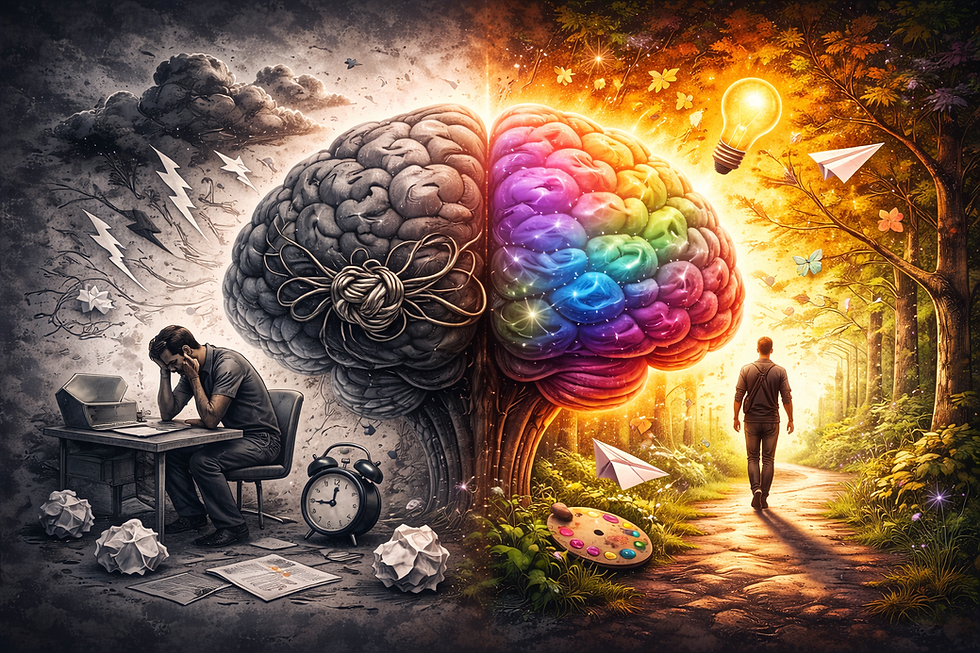
Researchers have found that when we step away from a problem, our brain continues working in the background. Even when we are not consciously trying to solve something, our mind is still making connections. That quiet mental processing often leads to insights that do not appear when we are staring directly at the problem.
Psychologists call this the “incubation effect.” You and I might simply call it clarity after space.
That small detour reminded me of two powerful lessons.
When we fixate on one solution, we can become entangled in it.
The harder we push, the narrower our thinking becomes. There is a reason that pushing harder does not always produce better thinking. When we stay locked onto one problem for too long, especially under pressure, our brain shifts into efficiency mode. It reaches for what is familiar. It recycles the same strategies. It runs the same mental loops. That works beautifully for routine decisions, but it quietly limits creativity. We mistake persistence for progress, even when we are running in circles.
Sometimes the most productive thing we can do is step away. Not as avoidance, but as intentional space.
Our minds need openness to make new connections. Creativity does not thrive under constant pressure. Even short breaks have been shown to improve problem-solving performance and reduce mental fatigue. A brief walk, a change of environment, or even a few minutes of mindful breathing can restore attention and improve the quality of our thinking.
If you are feeling stuck right now, consider this your permission to pause. Take a short walk. Sit in a coffee shop. Breathe. Give your brain the gift of silence and space.
You may find that clarity arrives when you stop chasing it.
And if this resonates with you, I would love to hear about it. These small mindset shifts often lead to meaningful change, and I am always happy to have that conversation.


Comments